
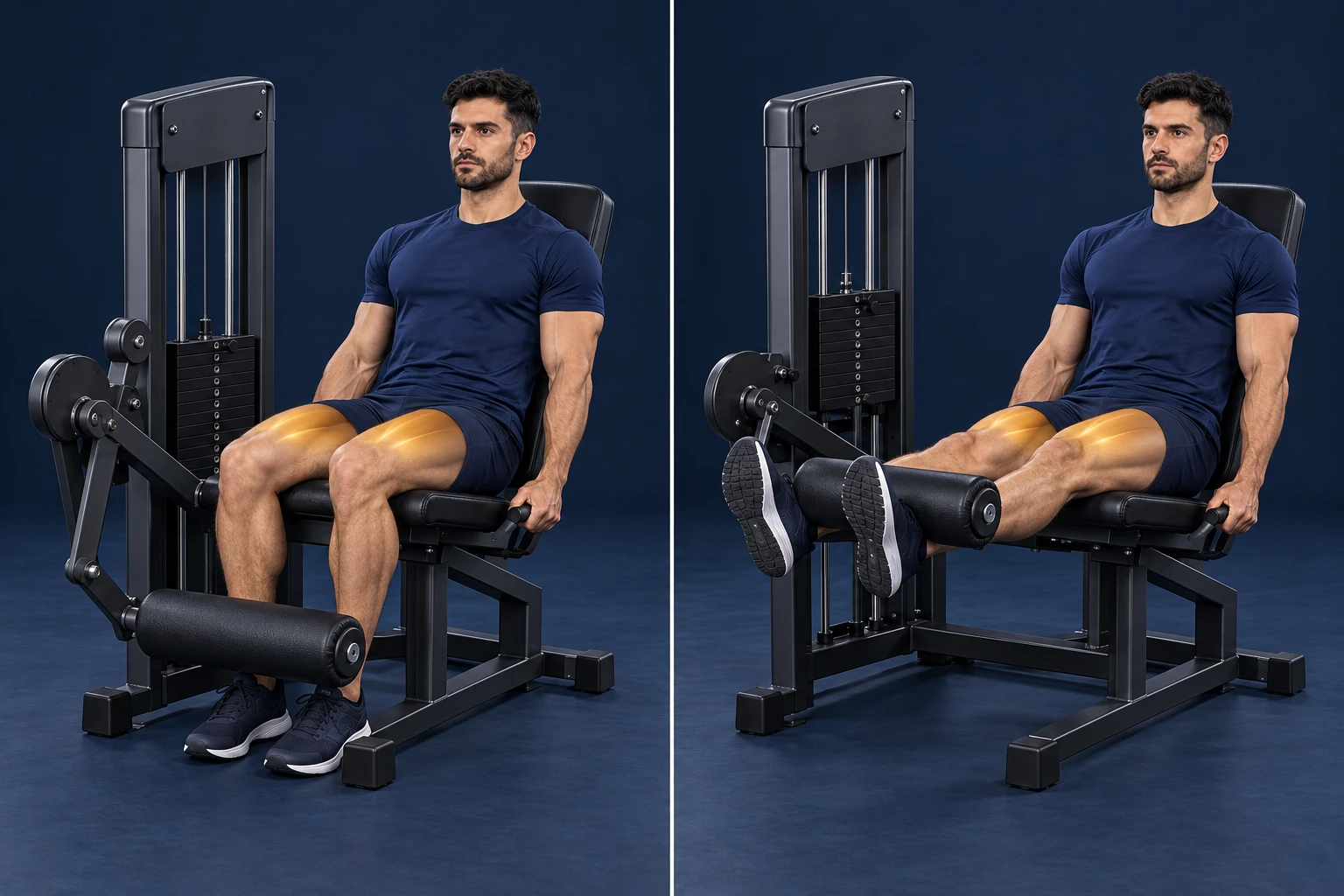
Execution sequence
- Read the rhythm and pause location. If tempo is numeric, confirm which phase each number describes.
- Control the specified phase and hold the assigned pause in the correct position.
- Use the load assigned for that tempo; do not remove the pause merely to complete the repetition target.
Reading a program example
The source example asks for a one-second pause at the top of each leg-extension repetition. This does not authorize painful knee locking or an automatically heavier load.
Important distinction
The purpose is not to create more muscle pain. Tempo, load and volume must be interpreted together. Research on repetition duration does not establish one extremely slow pace as best for everyone; your plan’s instructions take priority.
Check before starting
- Do not confuse a pause with prolonged compulsory breath holding.
- Do not guess the order of numeric tempo phases.
- Do not remove the slow phase simply to complete more repetitions.
Frequently asked questions
Is TUT the same as repetition count?
No. Two sets with equal repetitions can have different execution durations and pauses.
Is slower always better?
No. Arbitrarily slowing a movement can change the prescribed loading and volume. Follow the assigned rhythm.