
Execution sequence
- Check every exercise and its equipment before starting the sequence.
- Perform them in order using each exercise’s own target and safe transitions.
- After the last exercise, take the prescribed rest and begin another round only if assigned.
Reading a program example
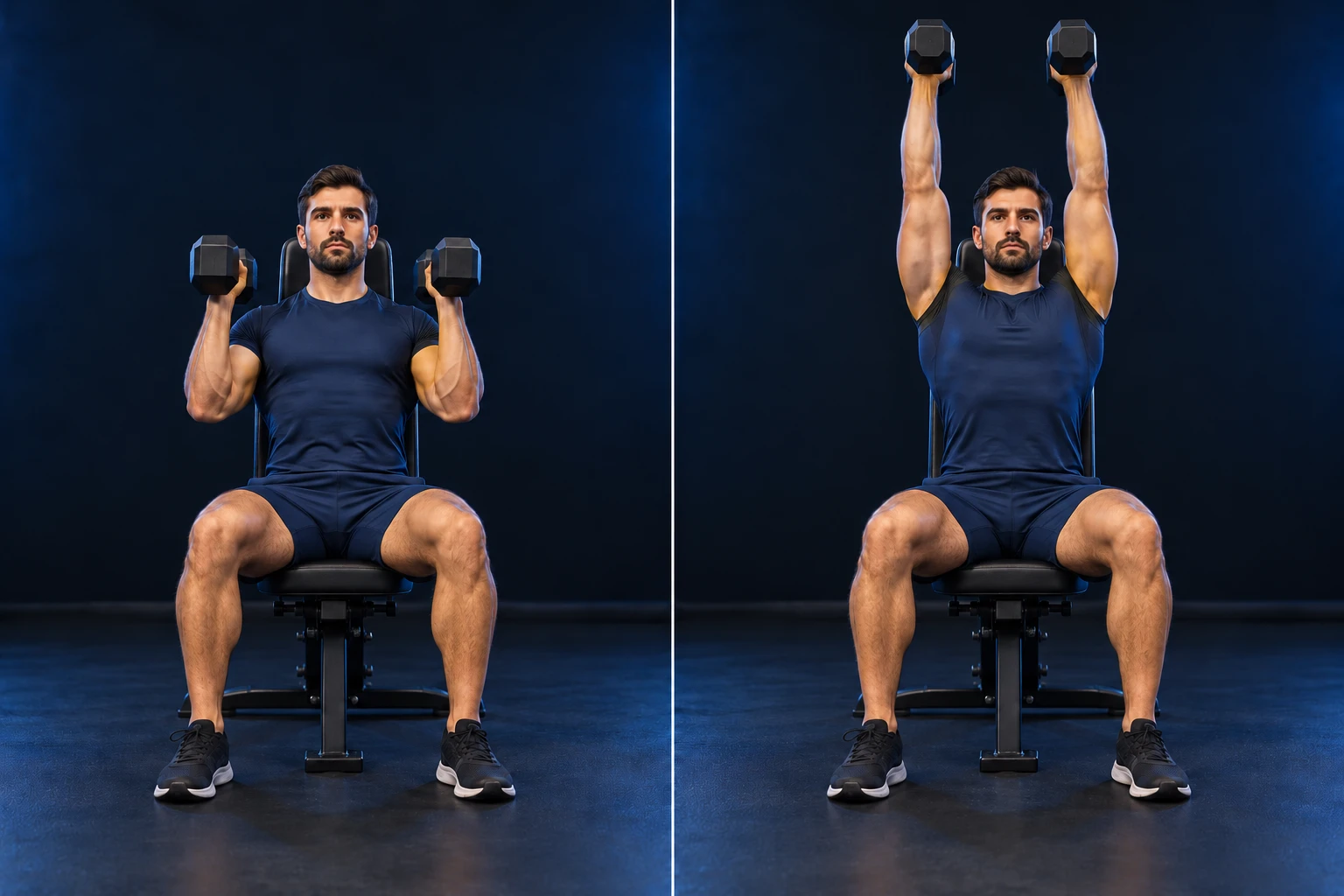
The shoulder example in the source notes is lateral raise, bent-over rear-delt raise, dumbbell shoulder press and barbell upright row. These four exercises are not automatically suitable for every athlete; shoulder limitations and session goals require individual consideration.
Important distinction
Terminology differs across sources. Here, a tri-set means exactly three exercises; for a giant set, use the complete list and count written in your plan.
Check before starting
- Report a loss of range or control near the end of the sequence.
- A crowded gym is not a reason to rush unsafely or change the order without checking.
- Greater fatigue alone does not prove a better training effect.
Frequently asked questions
How many exercises are in a giant set?
The source notes use three to five. Your individual program specifies the exact sequence.
Must the exercises target the same muscle group?
That is the source document’s definition. If your plan uses a different combination, follow the coach’s session-specific explanation.