
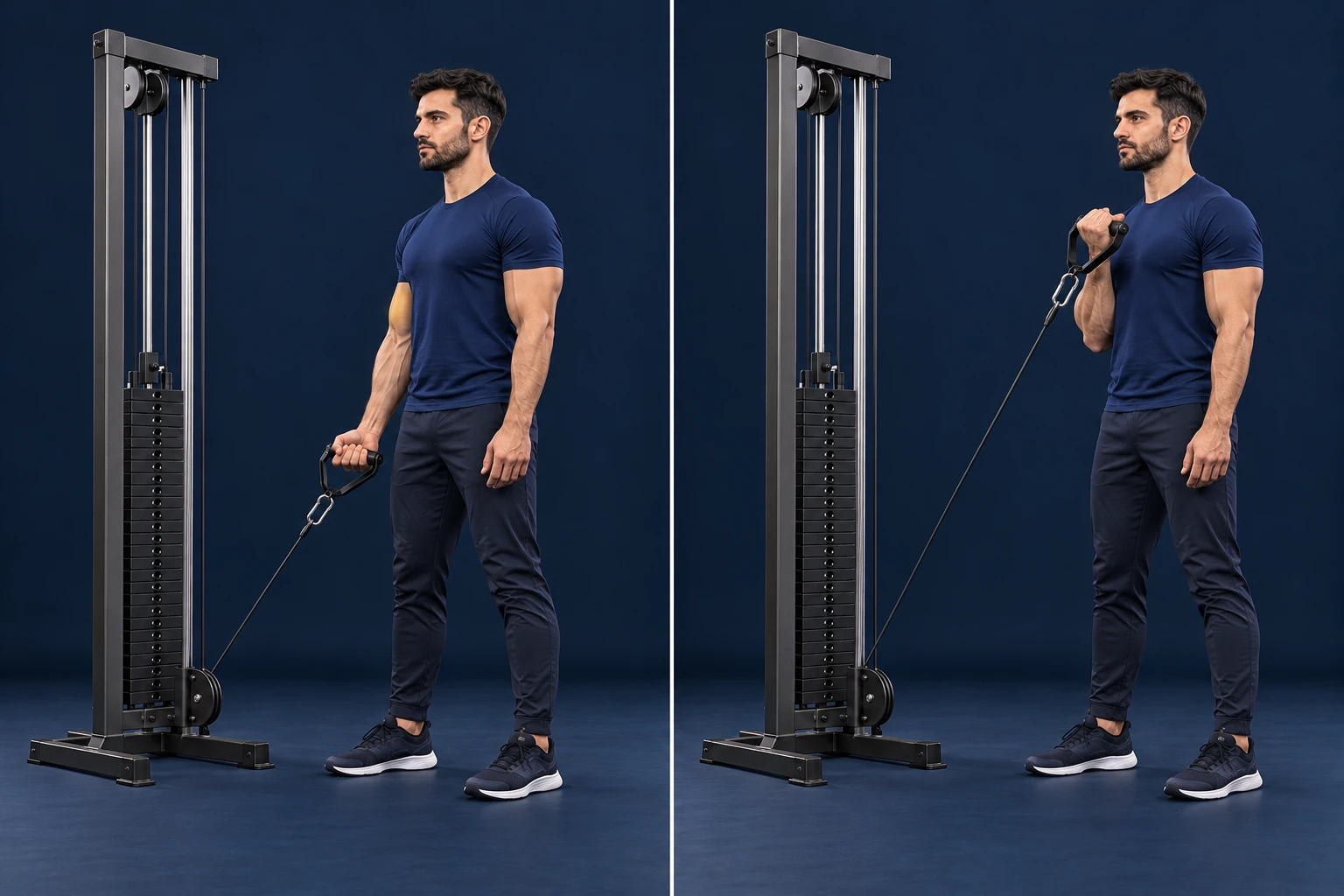
Execution sequence
- Read the assigned repetitions, sets and rhythm rather than prescribing from the “pump” label alone.
- Use the assigned load with controlled movement and an appropriate range.
- Take the prescribed rest and record any loss of repetitions or change in technique.
Reading a program example
The source gives twelve to twenty repetitions as an illustrative range. If your exercise has a different written sequence, follow that sequence. A sample range does not replace an individual prescription.
Important distinction
A temporary feeling of muscle fullness is not a measurement of lasting growth. More burning or soreness is not itself a success criterion. Assess progress through recorded load, repetitions, execution and the plan over time.
Check before starting
- Do not speed up merely to finish the repetition target sooner.
- Do not push through unusual pain to chase a stronger pump.
- Do not add extra volume to the session on your own.
Frequently asked questions
Is every high-repetition exercise a pumping set?
Your plan may use that label, but execution still requires the exact repetitions, tempo and rest.
Is the exercise ineffective if I feel no pump?
No. A momentary pump sensation alone cannot determine the long-term training result.