
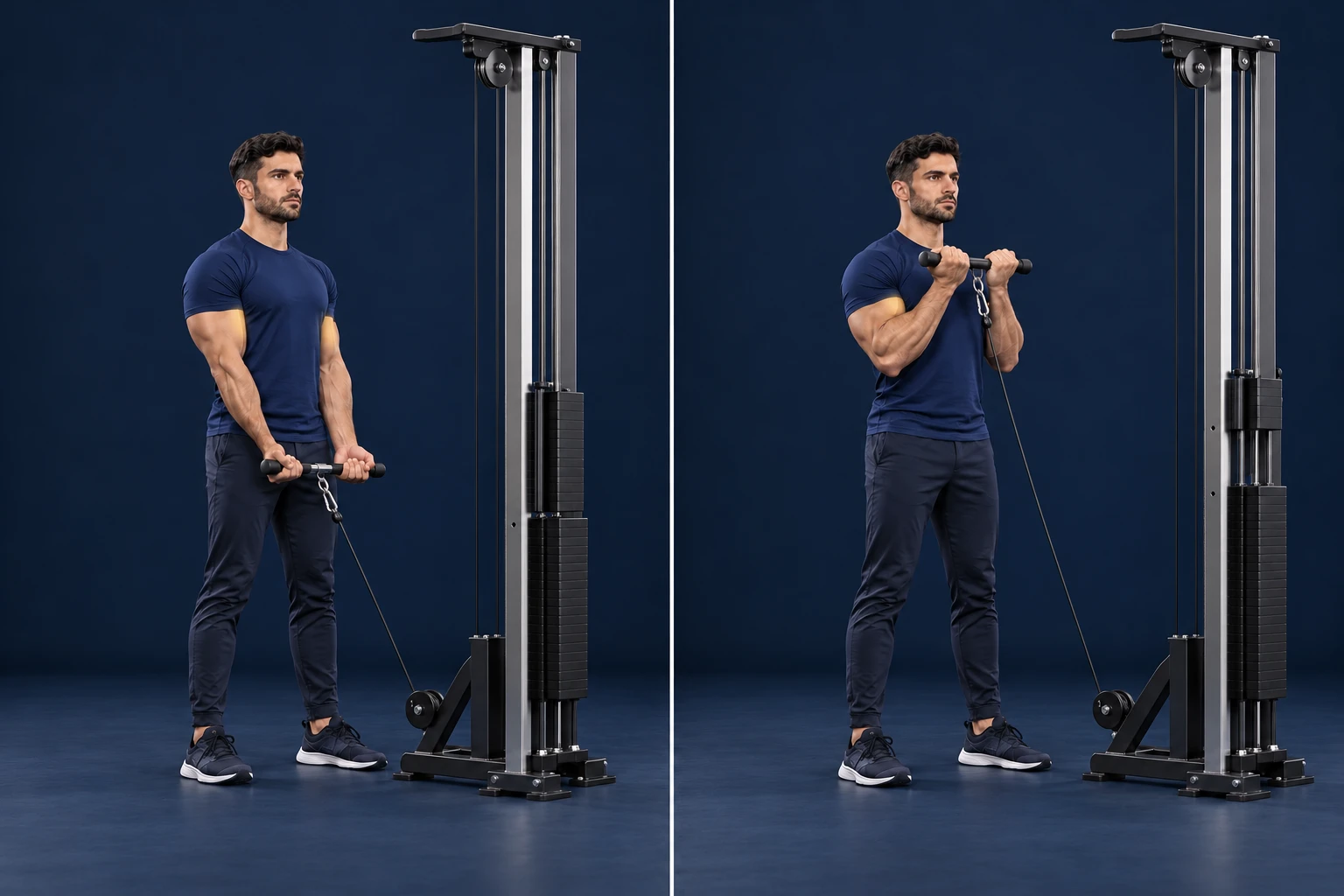
Execution sequence
- Prepare the required loads or machine settings before starting.
- Perform the initial segment to the assigned effort limit, then reduce the load as written.
- After the brief transition needed to change load safely, perform the next segment. Rest at the end of the sequence.
Reading a program example
Eight heavier repetitions, then ten lighter repetitions, then twelve after another reduction. The amount of reduction and number of drops must be specified in the plan.
Important distinction
Rest-pause usually retains load and adds a short rest; a drop set reduces load. This structure is not automatically better than straight sets, and its fatigue belongs in the session’s total workload.
Check before starting
- Check with your coach if changing the machine setting or dumbbell cannot be done safely.
- Do not add extra reductions after the planned sequence.
- Do not replace controlled repetitions with shortened or momentum-driven repetitions to force a target.
Frequently asked questions
Is there a long rest when reducing the load?
Usually only the transition needed for a safe load change is used. Follow any different instruction in your plan.
Is a drop set the same as a reverse pyramid?
No. Drop sets contain closely connected segments; reverse pyramid working sets have prescribed rest between them.